



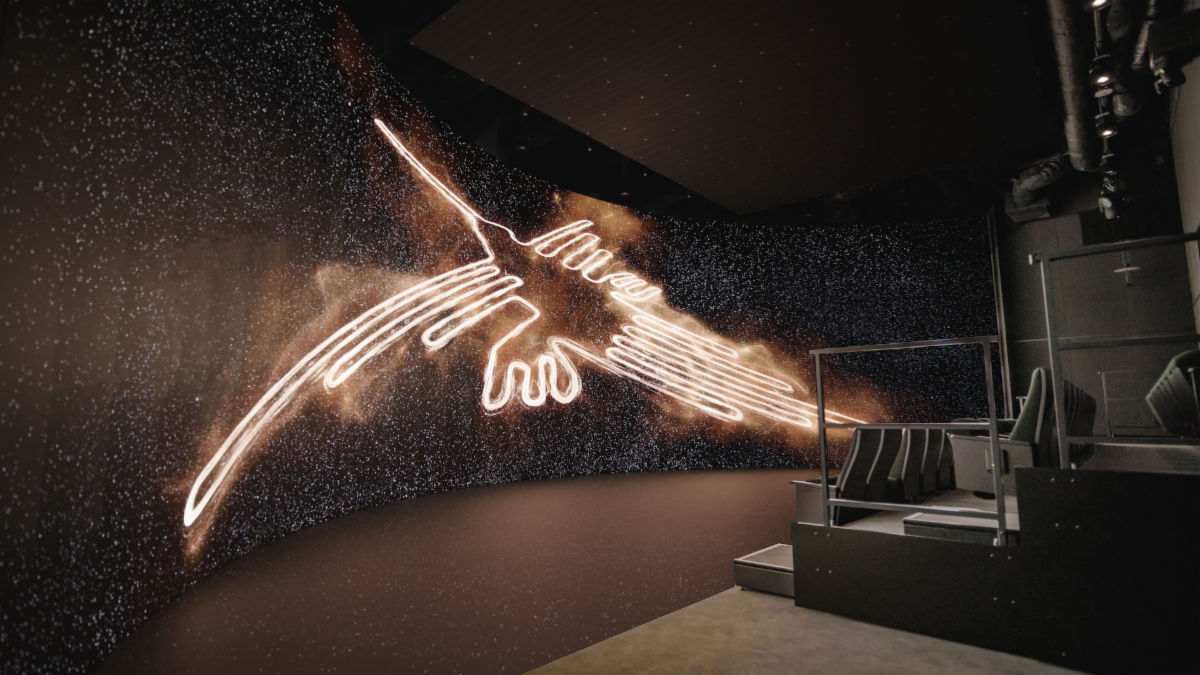
Japan - Lightware’s MX2-48X48-HDMI20-A-R matrix switcher has become a pivotal component in bringing the Koishikawa XROSS Digital Museum to life. An immersive, VR theatre within the museum, located at TOPPAN Koishikawa – a leading global provider of integrated solutions – in Japan, is designed to transport visitors into hyper-realistic, 360-degree environments.
The VR theatre boasts a 20m-wide and 5m-high Crystal LED curved LED screen to display 16K ultra-high-definition VR imagery, providing visitors with a highly immersive and realistic experience, along with a Leyard ceiling LED screen and a LED floor screen, designed to fully immerse audiences in striking visuals of clarity and scale.
With such advanced technology came equally complex technical demands. TOPPAN required a system that could support HDMI 2.0 distribution across a 64×64 matrix, providing seamless 4K 60P RGB 4:4:4 video quality. Yet, as project partners quickly discovered, there were no domestic manufacturers that offered a 64×64 HDMI matrix that supported 18 Gbps with non-blocking and met RGB 4:4:4 specifications, at the time.
This limitation left MTC Japan, the project’s AV integration partner, facing a significant challenge. According to Junji Matsuoka from MTC Japan: “The lack of a 64×64 HDMI 2.0 matrix in Japan which supported 18 Gbps with non-blocking and met RGB 4:4:4 specifications, posed a serious constraint. We knew we needed a high-capacity, reliable solution that could handle the 18 Gbps data stream efficiently, and Lightware’s MX2-48X48-HDMI20-A-R was the only matrix switcher capable of meeting these requirements.”
The Lightware MX2-48X48-HDMI20-A-R matrix switcher stood out for its ability to manage an uninterrupted, high-bandwidth signal flow without compromising quality. Lightware’s equipment had been previously used by MTC Japan, and based on this positive experience, MTC was confident that the MX2-48X48-HDMI20-A-R would be the ideal choice to support XROSS’ ambitious specifications.
“The high-level video distribution capability of the MX2 was a game changer,” Matsuoka continued. “In addition to offering a 64×64 HDMI 2.0 matrix, the MX2’s seamless integration with control systems through Lightware’s LW2 protocol simplified what could have been an intricate setup.”
At the heart of XROSS Digital Museum’s AV system is a PC server developed by TOPPAN that outputs eight signals, all routed through Lightware’s matrix to the video wall processor. On the output side, the MX2-48X48-HDMI20-A-R distributes signals to the RGBlink X8 processor with 24 inputs, which handle the stunning 16K projections on the Crystal LED screen. As with any complex installation, the XROSS Digital Museum project presented several integration challenges.
“The biggest challenge was coordinating all the moving parts and ensuring seamless integration,” Yu Nakamura from TOPPAN Inc explained. “Lightware’s MX2, with its non-blocking switching and reliable 18 Gbps performance, played a key role in overcoming these hurdles. It gave us confidence that the video distribution would be executed, which was crucial for the immersive environment we wanted to create.”